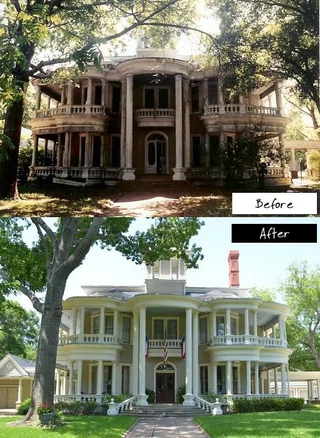
Nestled at 505 Griffith Avenue, Terrell, Texas, the majestic Matthew Cartwright House stands as a living testament to a bygone era of grandeur and Southern hospitality.
Built between 1882 and 1883 for the visionary rancher, banker, and civic leader Matthew Cartwright (1855–1925), this architectural masterpiece weaves together a compelling tapestry of family legacy, stylistic fusion, and steadfast preservation.
Renowned as one of the first grand residences in Terrell and situated on over an acre of meticulously landscaped grounds, the Cartwright House remains a vibrant centerpiece of East Texas heritage.
Check INSIDE PHOTOS HERE
A Legacy Rooted in Heritage
Matthew Cartwright, a third-generation Texan with parents tracing their roots to Tennessee pioneer families, graduated from Cumberland University, absorbing the architectural influences of antebellum Memphis. In 1874, he relocated to Terrell, where he quickly made his mark as a prominent cattleman, landowner, and banker. His marriage in 1876 to Mary Davenport, and their subsequent ten children, anchored the family’s growing presence in the community.
It was within this context of ambition and flourishing prosperity that Cartwright embarked on building his new residence. The house was not just a home; it was a statement of his entrepreneurial success and societal standing, reflecting the grandeur that post–Civil War Texas families often aspired to project .
Architectural Style: An Eclectic Synthesis
Although primarily Victorian, the Cartwright House is a unique amalgamation of Italianate, Second Empire, and Greek Revival influences.
The symmetrical facade, high ceilings, and elegant proportions evoke its Italianate-Second Empire roots, while elements such as the sweeping two-tiered porch are clearly drawn from Greek Revival traditions.
Central to its charm are the imposing 20-foot columns framing the wrap-around gallery and balcony. These were added in 1894, designed by Charles Alexander Gill—a Tennessee-born architect and craftsman—who masterfully married ornate detail with practical design suited to East Texas living.
The home also features a large, finished cupola on its fourth level—a crowning jewel offering panoramic views and an elegant aesthetic flourish.
Distinctive architectural details like intricate moldings, custom walnut woodwork, original light fixtures, bay windows, and nine fireplaces further underscore the meticulous craftsmanship of the period.
Historic Milestones & Modifications
1883 – The Beginning
Construction of the house commenced, establishing one of Terrell’s largest residences—both in scale and social impact.
1893–1894 – Greek Revival Gallery
Reflecting both style and comfort, the grand gallery and balcony expansions under Gill’s direction present a fusion of Southern elegance and functional design.
1922 – Sleeping Porch
As medical thought emphasized fresh air and ventilation, a sleeping porch was constructed—an adaptation that balanced style with emerging health trends .
In 1968, the Cartwright House was honored as a Recorded Texas Historic Landmark, acknowledging its historical and architectural significance. The subsequent year, in 1979, it achieved placement on the National Register of Historic Places, formally recognizing its enduring role in America’s built heritage.
Ownership & Family Continuity
Following the deaths of Matthew in 1925 and Mary in 1937, the house remained within the family circle—bequeathed to their daughter, Mrs. Jerome C. Head. Later owners included Mrs. C. S. Pickrell, before passing on to James I. Cartwright, a grandson of the original patriarch. Remarkably, the home has been consistently maintained and preserved by the Cartwright lineage, fostering an uninterrupted thread of familial stewardship.
The Interior: A Portrait of Power & Comfort
With around 7,600 square feet, the house includes six bedrooms and seven bathrooms, offering both scale and refinement. The grand interior is anchored by:
-
Two parlors, ideal for formal gatherings and receptions
-
A library, reflecting the educated tastes of its occupants
-
Ornate features: fireplaces, wet bar, built-in wine cooler
-
Structural finishes like custom walnut paneling, original hardwood floors, bay windows, and high ceilings
-
The kitchen has been sympathetically updated to include modern conveniences—marble countertops, stainless steel appliances, and dual dishwashers—while preserving the home’s historic integrity .
Grounds & Outbuildings
Set on 1.22 acres of heavily treed landscape, the property includes:
-
A Pebble Tec swimming pool with spa
-
Covered decks, gazebo, and pool bath, offering spaces designed for leisure and entertaining
-
A four-car, drive-through carriage house with workshop and partially finished attic
-
Additional storage buildings with utilities, a testament to the estate’s operational autonomy
- These features reflect not only elegance but practical design for hosting large gatherings and managing household functions seamlessly.
-
Preservation: Integrity Through Generations
One of the defining strengths of the Cartwright House lies in its consistency. Front-facing additions remain minimal—focused toward the rear outbuildings—to maintain architectural purity. Interior modifications respect the original layout, materials, and aesthetic character, ensuring the structure remains both historically accurate and functional .
The house’s listing on both the Texas registers and the NRHP underscores its regional and national importance—and the careful approach taken by successive owners to protect that legacy.
Why It Matters
-
Architectural Significance:
A rare example of combined Italianate, Second Empire, and Greek Revival styles—a hallmark of affluent 19th-century Texans expressing wealth and upward mobility.-
Cultural Insight:
The estate offers a window into the lifestyles of influential Texans, from ranching and banking to civic leadership and cultural hospitality. -
Continuity in Family Care:
Its uninterrupted ownership by the Cartwright family endows the house with a deeply personal narrative—an evolving yet cohesive family chronicle. -
Educational Value:
Students of architecture, history, and cultural studies can explore how regional climates, social trends, and individual ambition converge in such historic residences. -
Community Landmark:
Situated within Terrell’s historic downtown district, the house brings architectural gravitas and identity to the community—hosting events, gatherings, and serving as a tangible link to the city’s formative years.
A Living Monument
Today, the Cartwright House is more than a historic relic—it’s a living monument that speaks across generations. Its walls have witnessed family milestones, community celebrations, and the ebb and flow of history.
-
Its careful upkeep preserves not just wood and mortar, but the essence of Texas culture: ambition rooted in the land, complemented by gracious hospitality and architectural artistry.
Visiting & Experiencing
The property, while privately owned, often participates in local heritage events, including Terrell Heritage Museum tours and select open-house days. It offers visitors a rare opportunity to step into the grandeur of Victorian-era Texas living—complete with lush grounds, grand interiors, and unique features like the cupola’s view.
For heritage travelers or architecture buffs, a guided visit reveals:
-
The sweeping proportions and sense of symmetry
-
The elegance of walnut woodwork, original light fixtures, and fireplaces
-
The blend of modern amenities within a historic home
-
Thoughtful landscaping and period-appropriate additions
Each detail—from building materials to interior layouts—serves as an artifact of distinguished taste and familial devotion.
Conclusion
The Matthew Cartwright House at 505 Griffith Avenue stands as a vibrant tapestry woven through time. It intertwines architectural grandeur, commitment to family legacy, and community heritage into a single, enduring structure. Its stately columns and ornate porches, its cozy parlors and grand bedrooms, its labyrinth of family stories—all continue to speak to a Texas defined by enterprise and hospitality.
As Terrell grows and evolves, the Cartwright House remains a steadfast sentinel to its past—a place where history isn’t merely preserved in stone, but lives and breathes through every beam and detail. Whether you’re drawn by architecture, stories of influential Texans, or simply a love for well-crafted homes, this house stands ready to inspire admiration for the art of building—and the soul of a family who made it their own.