A Storied Past: The Ryer House of Matawan
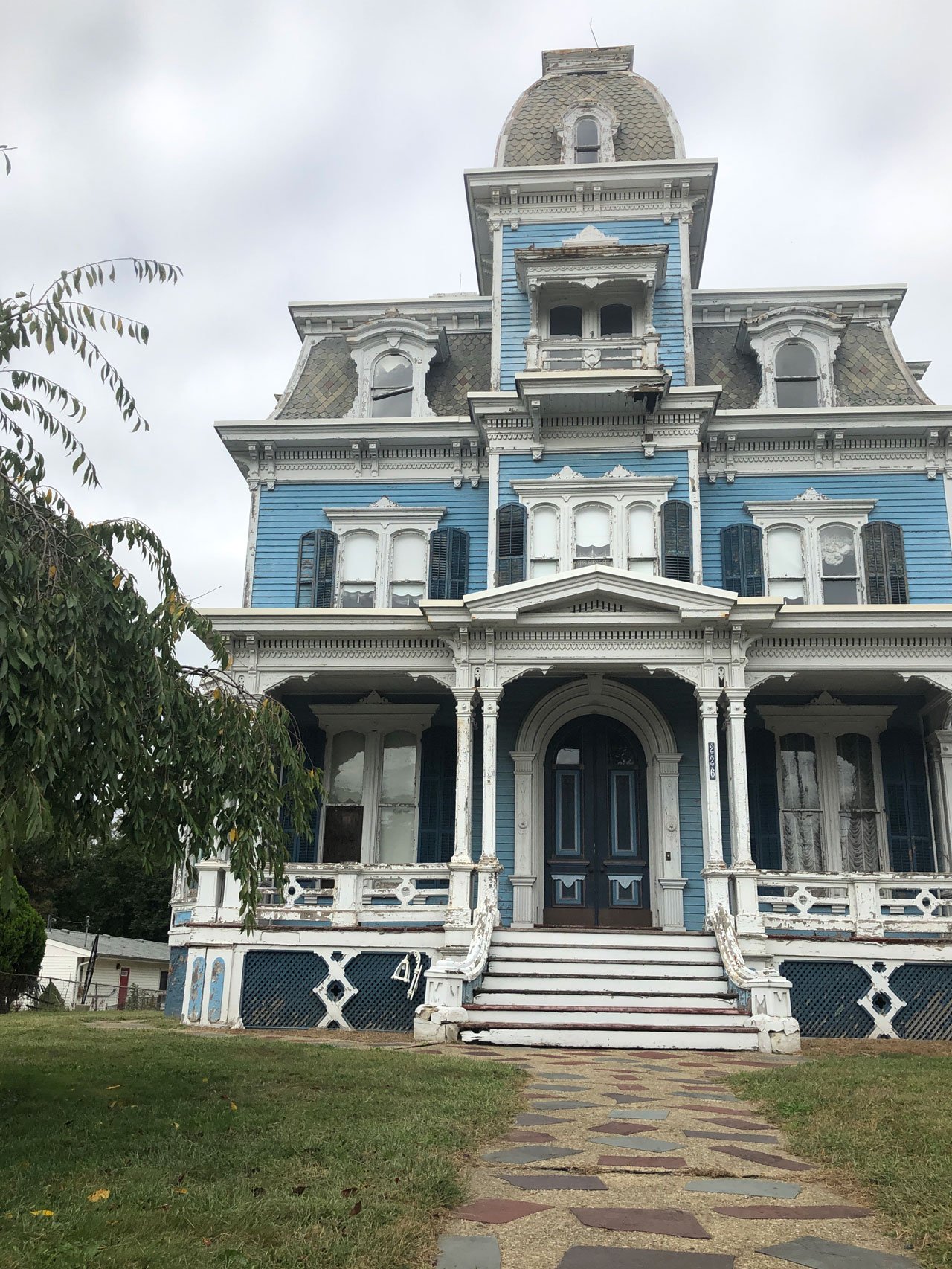
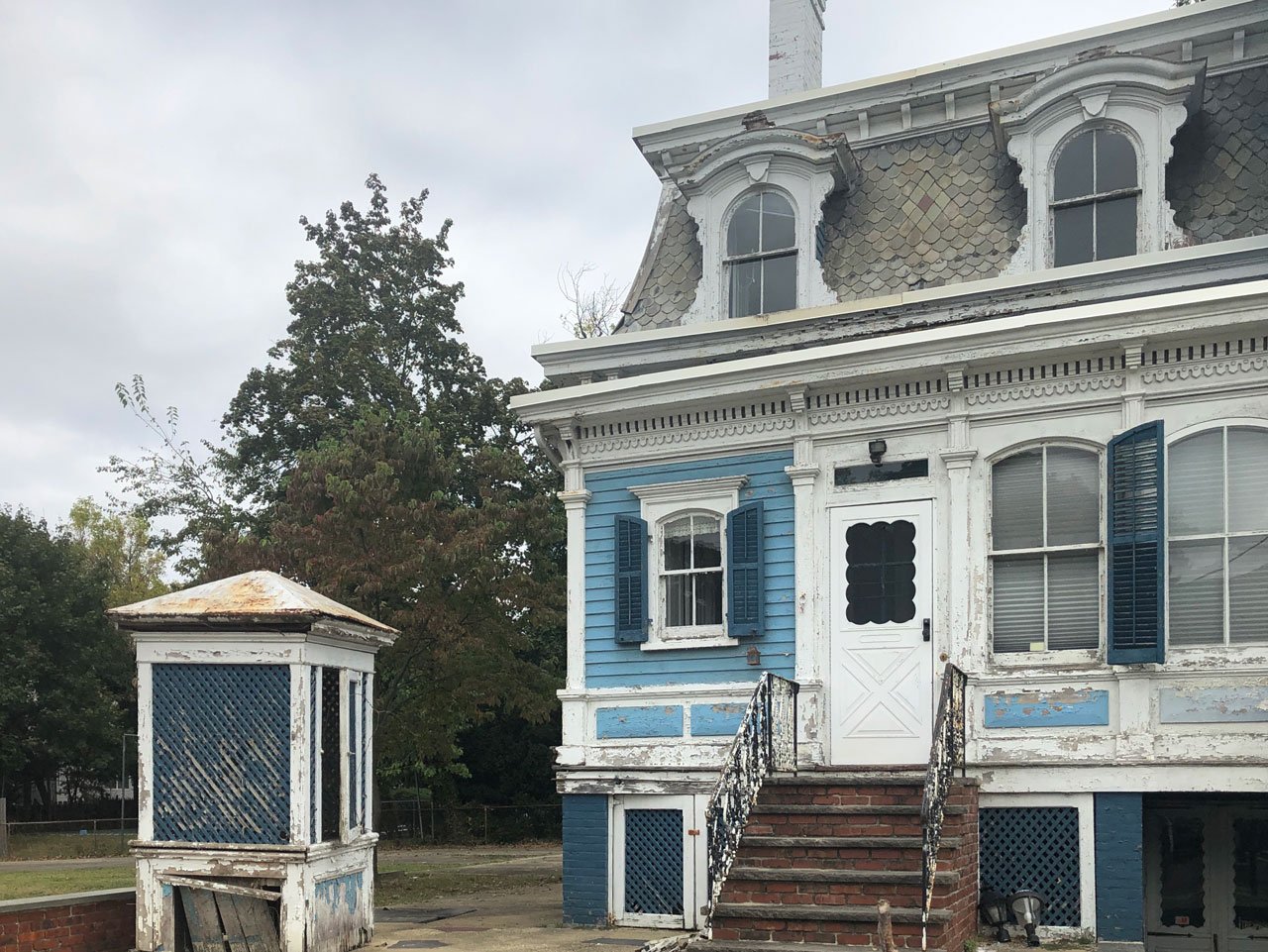
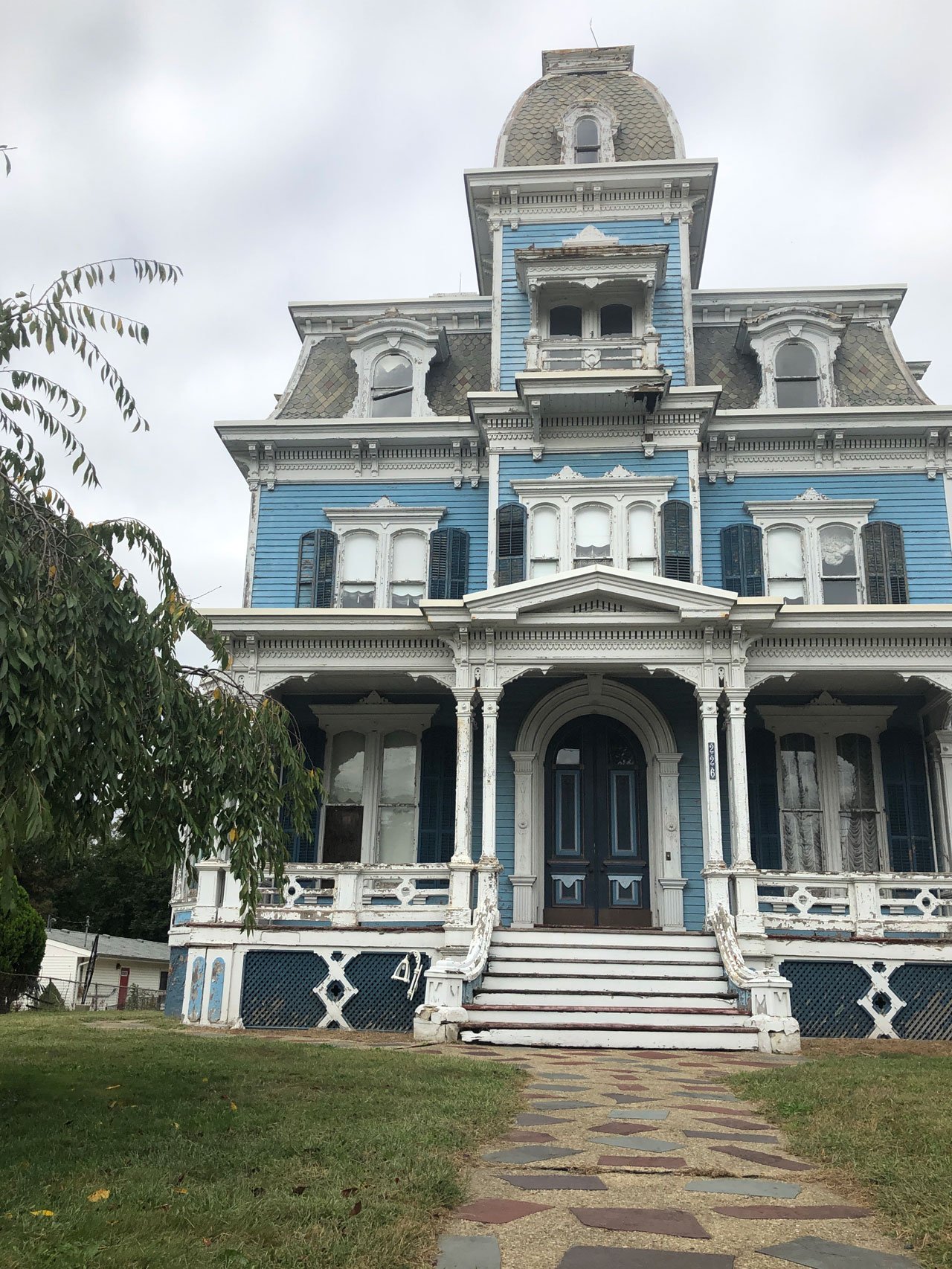
In the heart of Matawan, New Jersey, stands a historic treasure whose regal presence has long captivated both residents and visitors: the Ryer House, affectionately known in the neighborhood as the “Big Blue House.”
Built in 1873 by David Ryer—an enterprising produce merchant and past mayor of Matawan—this architectural gem embodies not just the ornate elegance of the French Second Empire style but also tells a vivid story of community, ambition, and pride.
The Man Behind the Mansion
David Ryer hailed from a family deeply rooted in Matawan’s civic and economic life. For generations, the Ryers had been farmers and merchants, known for their vibrancy in local produce markets.
Ryer himself expanded this tradition, establishing a successful produce business that supplied goods across Monmouth County.
As a respected businessman and community leader, he was elected mayor at a time when Matawan was transitioning from rural district to flourishing township.
By commissioning a grand home at 226 Main Street, Ryer was making a statement—not only about his family’s prosperity, but about the potential he saw in Matawan itself.
Amid an era of railroad expansion and growing suburban development, his house was both a personal retreat and a public landmark.
It stood, and still stands, at a prominent corner—visible, stately, and unmistakable in its “Big Blue” paint.
A Defining Example of Second Empire
Second Empire architecture originated in France under Napoleon III (1852–1870) and quickly became a globally admired symbol of refinement.
In the United States, the style flourished after the Civil War, especially in the Northeast. Yet by the 1870s, grand Second Empire villas were still relatively rare—particularly in smaller towns such as Matawan.
The Ryer House is a textbook case of the style’s major features:
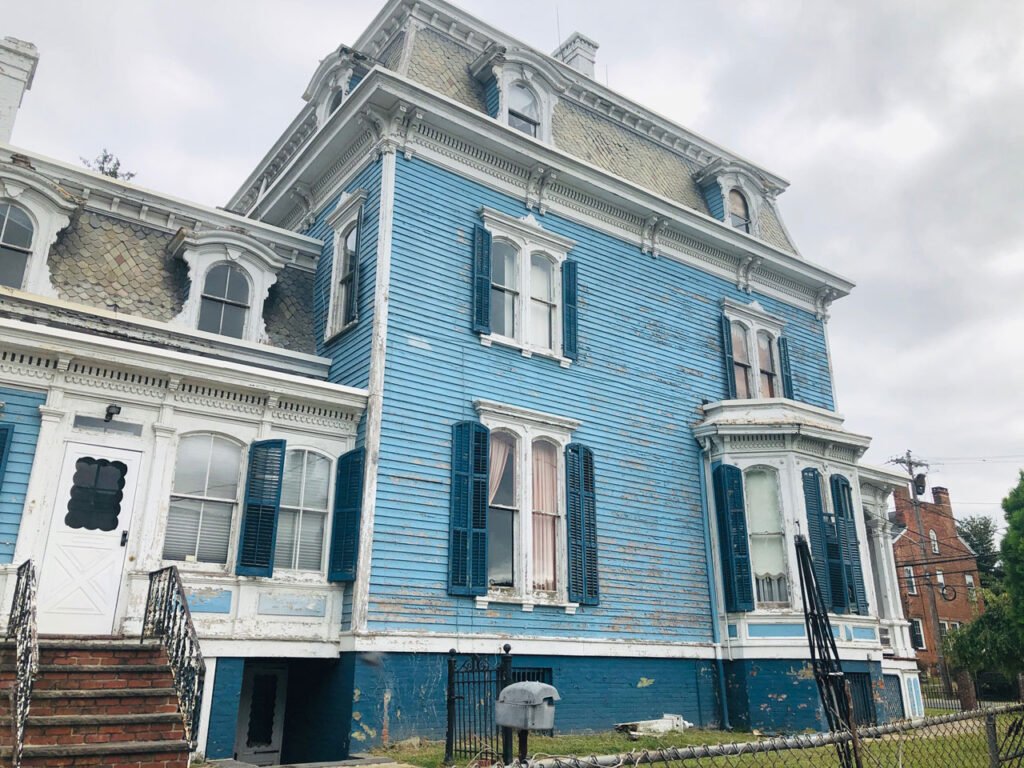
Mansard Roof: Perhaps the most iconic element, the mansard, with its steep lower slope and a horizontal top, allowed for a full extra floor under the roof—an efficient yet elegant design.
Central Tower: Mounted above the main entrance, the tower both punctuates the home’s verticality and implies watchfulness, insight, and prestige.
Ornate Cornices and Moldings: Every façade is adorned with intricately profiled trim—brackets, dentils, and scrollwork that elevate the home’s visual richness.
Bay Windows: Protruding bays on several sides bring in light, expand interior rooms, and break up the rigid box of the structure to graceful effect.
Elaborate Porch: A detailed front porch with turned posts, decorative spandrels, and carved balustrades greets visitors—highlighting hospitality and flair.
The ensemble is so coherent and well-executed that Preservation New Jersey refers to the Ryer House as “a fine example of the Second Empire style”
A Rarity in the Garden State
And rare it is. The Matawan Historic Sites Commission reports that the Ryer House is one of just two remaining examples of Second Empire residential architecture in New Jersey.
The only other standing example resides in Cape May, a city renowned for its Victorian architectural district . That scarcity dramatically heightens the Ryer House’s significance—not just locally, but statewide.
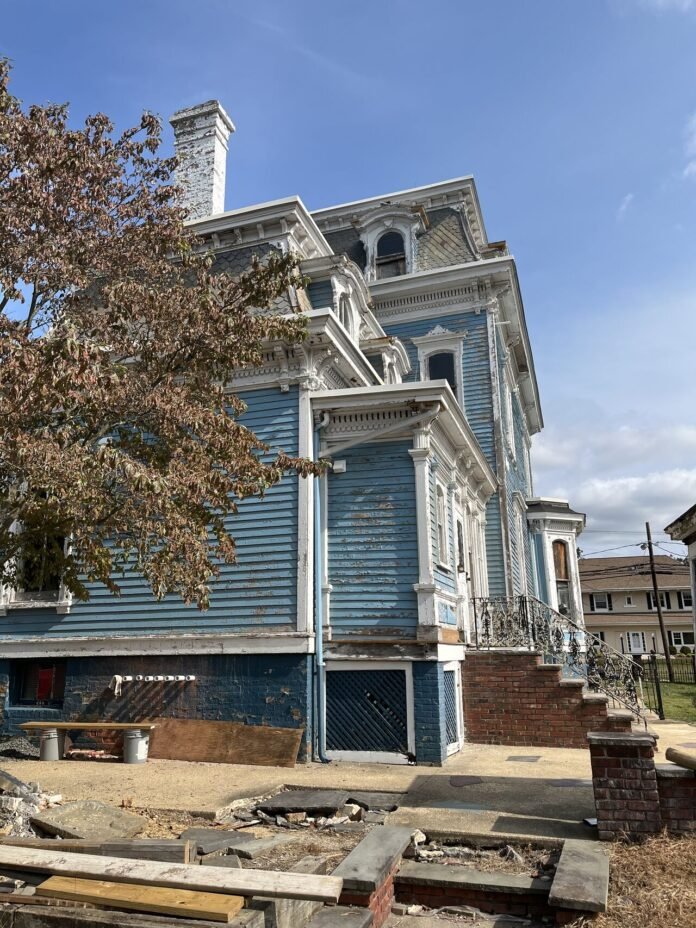
The commission also underscores that the house’s survival is the result of decades of care by an attentive neighborhood, even if structural issues have accumulated with age.
Indeed, while the home has never—and never will—win a preservation award, its modest guardianship reflects Matawan’s collective respect for its built heritage.
The Restoration Initiative
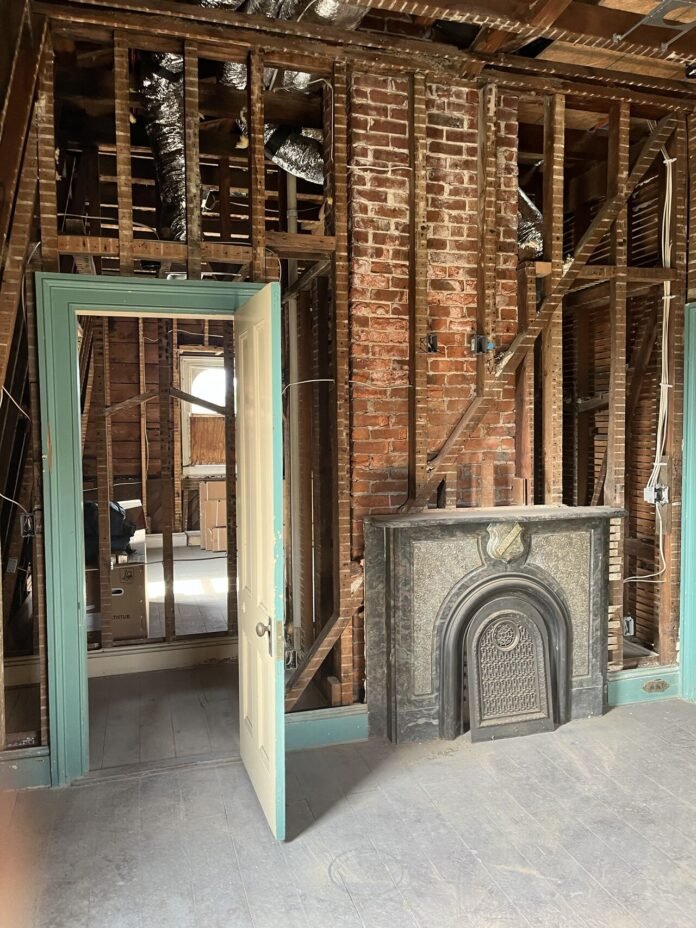
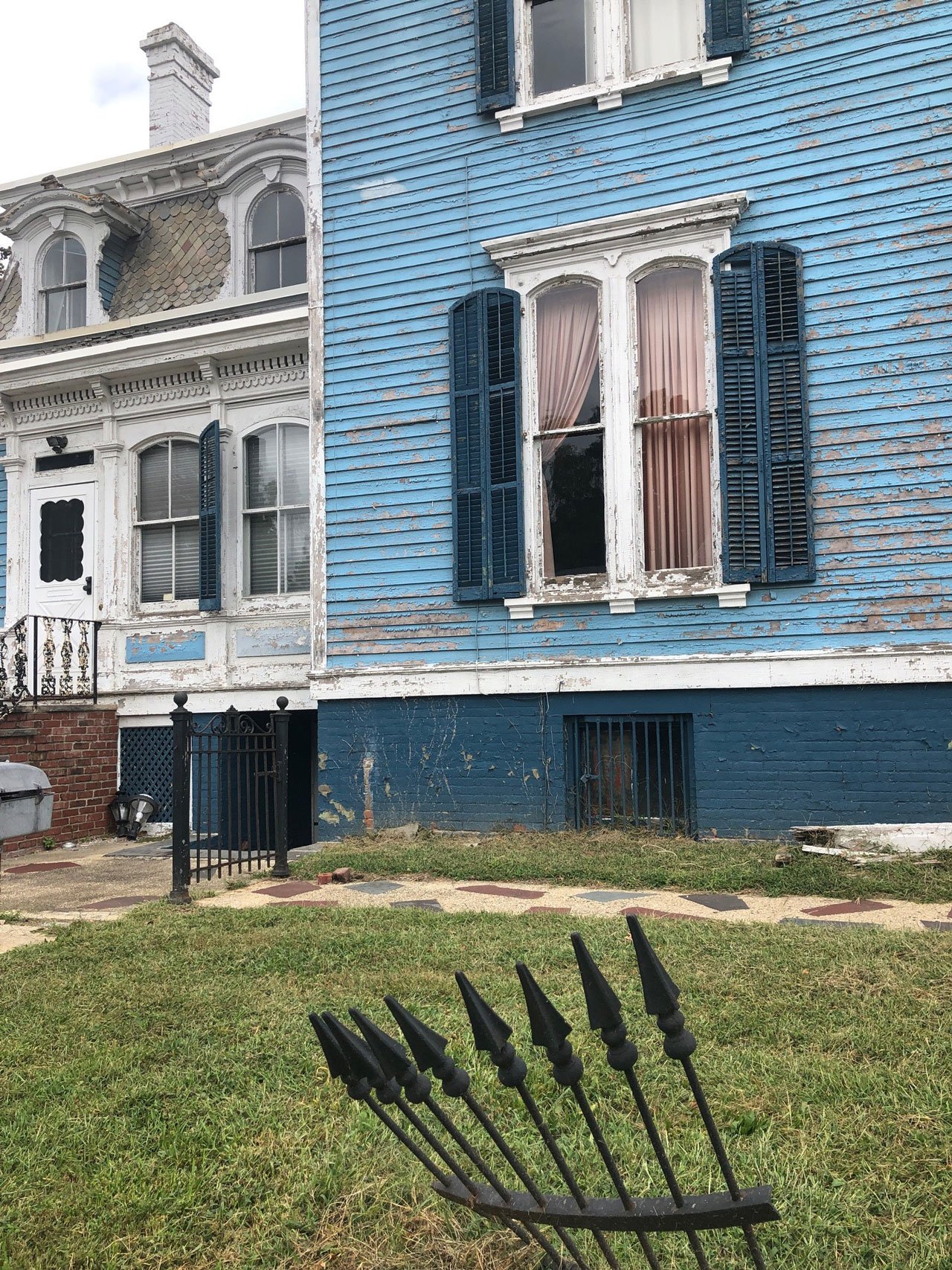
In recent years, however, the house’s structural vulnerabilities became too serious to ignore. Cracked foundation walls, failing cornices, rotted woodwork, and outdated electrical systems were slowly eroding both its safety and its aesthetics.
In response, the borough’s Planning and Zoning Board received a letter dated February 25 from the Historic Sites Commission, calling attention to the building’s deteriorating state.
The letter described the Ryer House as “one of only two such homes left in New Jersey. The other example is in the historic town of Cape May” . It urged property owners, preservation advocates, and the borough to join forces in addressing the restoration.
The letter injected fresh momentum into restoration planning. Neighborhood meetings have been held, in which neighbors, local historians, architects, and town officials reviewed the home’s needs. Supporters also researched funding options, from state preservation grants to matching local allocations.
At the core of the effort is a goal to ensure structural soundness without compromising historical integrity. Restoration priorities include:
Foundation and Structural Repair
Stabilizing and repairing crack-prone walls, improving drainage and waterproofing, and shoring up sagging joists and beams.
Roof and Cornice Refurbishment
Restoring the defining mansard roof—including slate tiles and decorative metalwork—and repairing badly weathered eaves and brackets.
Woodwork and Porches
Replacing deteriorated balustrades, columns, and siding with wood compatible in species and grain to the originals, ensuring authenticity.
Window Preservation
Reinforcing or replicating the original double-hung sash windows and signature bay windows, while improving energy efficiency with discreet storm units.
Tower and Decorative Details
Reviving the central tower’s roof, finials, moldings, and cresting—a high-visibility restoration whose effects are immediate and powerful.
Interior Upgrades (Structural & Systems)
Replacing aging electrical, HVAC, and plumbing systems to meet modern safety standards—while respecting interior detailing like parquet floors, moldings, and fireplace surrounds.
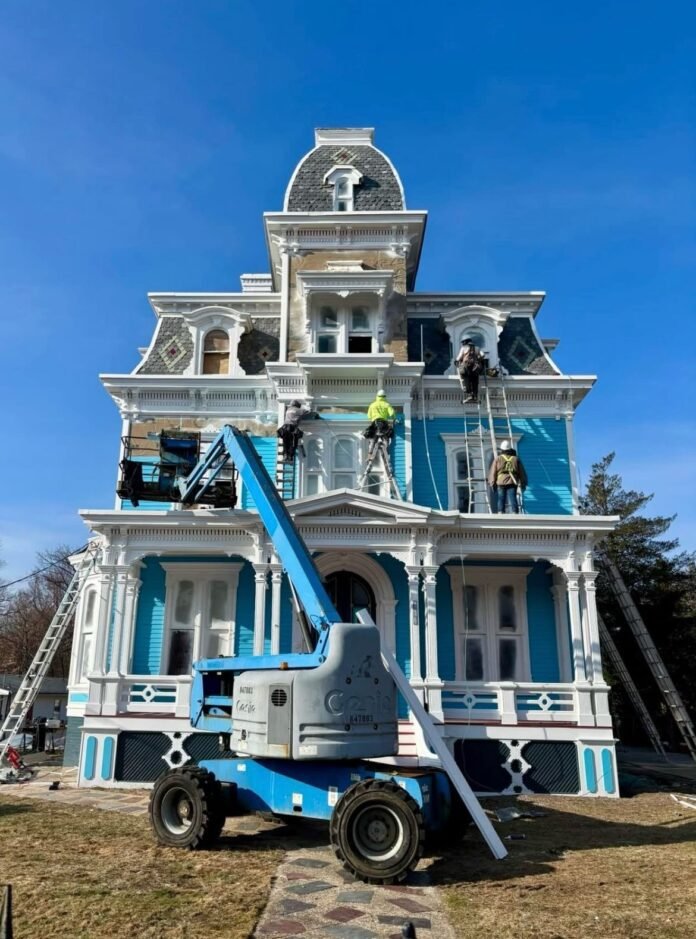
The project is expected to unfold in phases to accommodate funding cycles, aim for minimal disturbance, and capitalize on seasonal constraints (external woodwork is best done in milder weather, for instance). Work has already begun on critical structural elements, and preparatory stabilization is underway.
Community Involvement & Stewardship
What makes this restoration particularly compelling is the deep local engagement it has inspired. Matawan’s Historical Society has launched educational programs and walking tours highlighting the house’s architecture and the Ryer family’s role in town history.
Donations from small businesses, alumni groups, and neighborhood associations have exceeded expectations—suggesting strong local pride in saving “Big Blue.”
On restoration days, curious passersby stop to view scaffolding being raised, swing arms scrubbing cornices, and men delicately removing layers of flaking blue paint. Their whispers are soft marvels: “So this is the Big Blue,” “I remember coming here as a kid,” “Can’t wait to see it when it’s done.”
Local contractors and artisans have been tapped to do the specialized work—shipping in slate tiles to match, milling custom bracketry, and replicating period-appropriate trim.
The town’s environmental commission is coordinating planting of native shrubs and trees to buffer storm runoff and complement the façade’s renewed palette.
A Living Legacy
Once restored, the Ryer House is expected to inspire a new generation’s appreciation for Matawan’s heritage. Plans are being explored for limited public access through open-house days, lecture series, and integration into walking-tour routes.
While privately owned, the house will be visible to all—its form and presence speaking silently of the town’s layered history.
Within the restored walls, echoes of 19th-century family life—family meals on sweeping verandas, children racing up spiral stairs under the central tower, harvest deliveries from family-owned farms—will feel surprisingly close.
Yet the home will no longer stand as an isolated relic. Updated electrical and mechanical systems will allow it to function safely in the 21st century, potentially as a lively event venue, office space, or even an art gallery.
Ultimately, the restoration is about more than preserving wood and slate. It aims to preserve continuity—to ensure that the lineage of local vision and craftsmanship represented by David Ryer remains unbroken.
Why It Matters
Historic preservation often hinges on a simple principle: We save buildings not for their own sake, but for what they mean to a place.
They anchor our growth, embody a community’s identity, and bear witness to collective experience. The Ryer House, with its architectural distinction and symbolic value, does all these things.
In an age when suburban expansion and chain-store uniformity threaten to flatten character out of towns like Matawan, the resurgence of Big Blue is a profound gesture. It says that even as the world changes, the memory of civic aspiration, artistry, and small-town civic life matters.
The Ryer House isn’t just being restored—it’s being rehonored, for its original intent and for its place in the town’s ongoing story. Because historic survival isn’t only about old bricks and wood—it’s about the lived promise they represent.